History of the Alpaca
Alpacas are gentle, docile animals, which come from the
Alto Plano regions of Chile, Peru and Bolivia. They 
have been domesticated for more than four thousand years.
Their fibre, which is unique in strength and lustre, was once  
used to produce garments of exceptional quality for the
Inca nobility.

The  Andes. The home of Alpacas

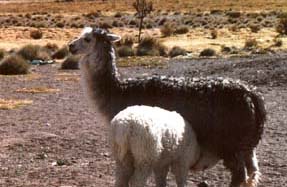
Alpacas living on the Alto Plano
This remained so until the Spanish invasion of the lands 
of the Inca in the 1500's when the Alpaca herds 
were almost exterminated. The remainder were driven to 
the highlands of the Alto Plano to allow the Spanish 
Merino sheep to graze the lower pastureland. 
Amongst the native Indians the Alpaca remained a valid 
currency and so they continued to farm these unique 
animals. The colourful tassels and braids seen on some 
Alpacas are the equivalent of the British sheep farmer's 
stock marks. Each is unique to the owner of the animal and 
is used   to identify it when the Alpacas are gathered for 
shearing etc. The terrain in their natural habitat is very 
severe, with hot blazing sun by day and sub-zero             

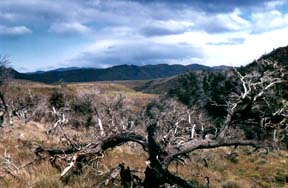
The Chilean Alto Plano

 temperatures by night. 
There are two types of Alpaca the Suri and Huacaya. In Britain today, we have a thriving Alpaca breeding
 industry, of mainly Huacaya Alpacas and a growing market for the fibre produced. Although numbers are
not accurate it is estimated that we have around 4000+ Alpacas resident in the UK. The numbers needed for
commercial production of fibre is therefore still short of the 20,000 or so animals required, and so a
favourable market for the breeding of quality Alpaca will continue for the foreseeable future.

back